Topics
Wealth Management Reporting
Understanding Wealth Management Reporting
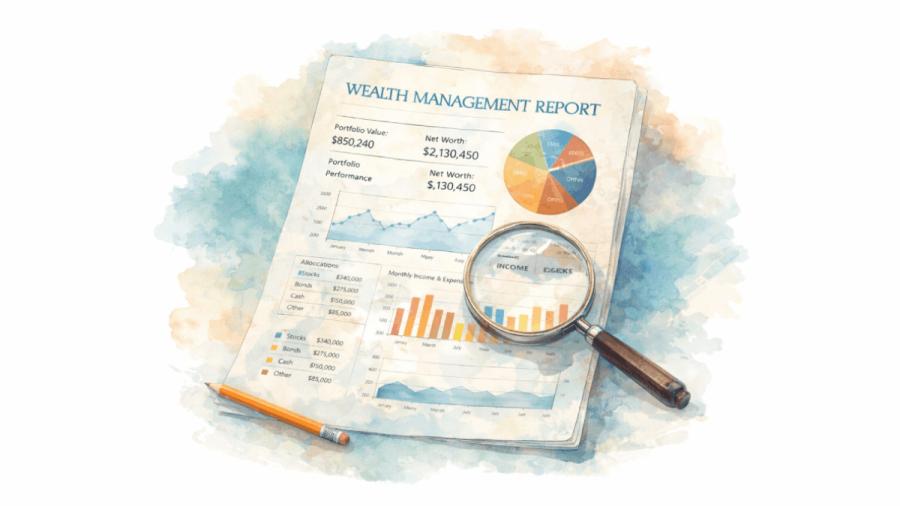
Wealth management reporting is the structured process of capturing, analyzing, and presenting a client’s investment and financial data in a transparent, timely, and personalized manner. These reports are essential tools for communicating portfolio performance, risk exposure, fees, and compliance information to clients, advisors, and internal stakeholders.
High-quality reporting strengthens the advisor-client relationship by building trust, demonstrating value, and enabling collaborative decision-making. As firms face growing expectations for customization, real-time access, and regulatory clarity, wealth management reporting has evolved from static statements to dynamic, digital dashboards integrated with CRM, billing, and portfolio systems.
According to the Capgemini World Wealth Report 2023, 65% of high-net-worth individuals consider personalized reporting a key driver of advisor satisfaction. (Capgemini, 2023)
Why Wealth Management Reporting Matters
Key Benefits:
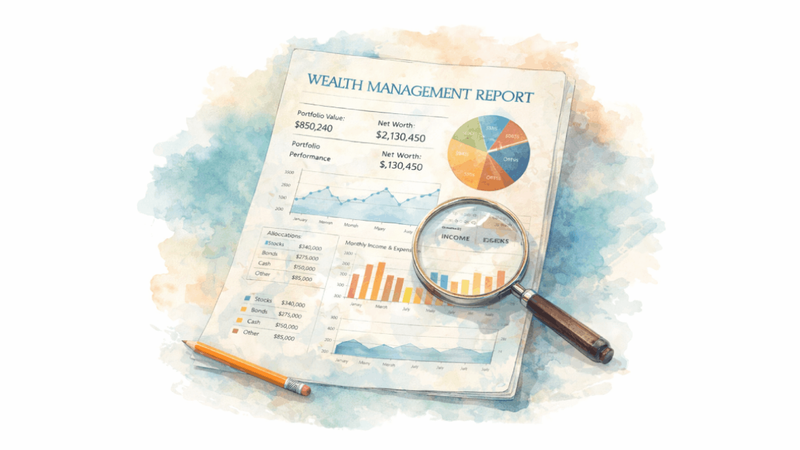
- Transparency: Breaks down fees, performance, and risk in a clear, client-friendly format
- Compliance: Satisfies regulatory obligations like CRM2, MiFID II, and Reg BI
- Engagement: Creates a deeper advisory relationship through interactive insights
- Differentiation: Helps firms stand out with white-labeled, visually branded experiences
- Retention: Personalized insights drive loyalty and reduce advisor churn
Modern reporting systems allow advisors to offer portfolio snapshots, capital gains summaries, tax documents, and ESG impact scores on demand.
How Wealth Management Reporting Works
1. Data Aggregation
Pulls holdings, transactions, fees, benchmarks, and risk metrics from custodians, CRMs, and internal systems
2. Data Normalization and Enrichment
Cleans, reconciles, and contextualizes data to ensure consistency and usability
3. Report Generation
Automated creation of standard and custom report types including:
- Performance attribution
- Billing breakdowns
- Client statements
- Benchmark comparisons
4. Distribution and Access
Delivered via secure portals, apps, or scheduled PDF reports, often with multilingual and multi-currency options
5. Advisor Enablement
Advisors use reporting tools to prep for client meetings, personalize conversations, and provide proof of value

PureFacts’ Advantage in Wealth Management Reporting
PureFacts is a recognized leader in revenue and performance reporting for wealth and asset management firms. Our dedicated platform, PureReports, delivers:
- Fully customizable templates to match firm branding and client preferences
- Integration with billing and compensation engines to show fee justification and payout clarity
- Multi-channel output (PDF, portal, mobile) with real-time and scheduled capabilities
- Compliance-ready disclosures with audit trails and versioning
- Client-centric tools for performance, ESG, and wealth planning snapshots
Our clients use PureReports to serve high-net-worth individuals, family offices, advisors, and institutional clients with confidence and precision.

Use Cases and Enhancements
- Growth Wealth Management Reporting: Report automation at scale as firms expand AUM
- Enhancement Services: Real-time dashboards and deeper performance analytics
- Medium-Term Reporting: Support for quarterly and semi-annual fiduciary reviews
- Fee Visualization: Justify value with clear breakdowns of layered pricing
- Advisor Enablement: White-labeled client packs for personalized communication